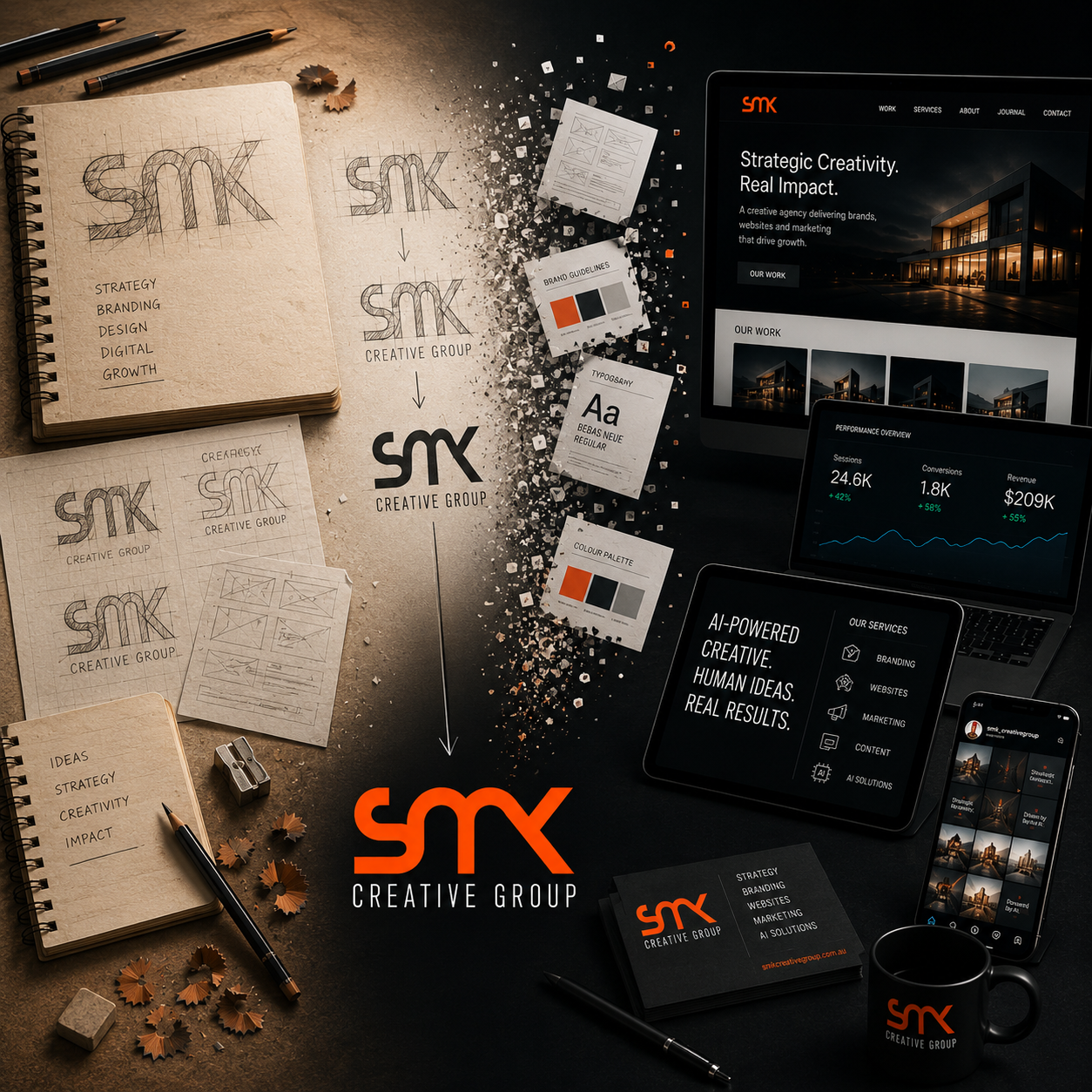
In an increasingly crowded marketplace, attention has become one of the most valuable commodities a brand can possess.
Every day, consumers are exposed to thousands of messages competing for a moment of recognition. New technologies emerge, platforms evolve, and marketing trends come and go. Yet despite these constant changes, one principle continues to separate memorable brands from forgettable ones: clarity.
The strongest brands are rarely the most complicated. They are the easiest to understand.
Whether viewed through a website, an advertising campaign, a social media platform or a customer experience, successful brands communicate a clear and consistent idea. Their purpose is evident. Their message is recognisable. Their identity remains coherent regardless of where it appears.
The Challenge of Being Understood
As businesses grow, communication often becomes fragmented. Different channels begin speaking different languages. Marketing efforts become disconnected. New opportunities emerge, but the message becomes less focused.
The result is not necessarily a lack of creativity or ambition. More often, it is a lack of alignment.
Behind every enduring brand is a framework of strategic decisions that shape how it is seen, understood and remembered. Visual identity, messaging, content, customer experience and digital presence all contribute to a larger story.
When these elements work together, brands become easier to recognise, easier to trust and ultimately more valuable.
The strongest brands are not always the loudest. They are often the clearest.
Clarity creates confidence. Confidence creates trust. Trust creates growth.
This principle has remained consistent throughout decades of advertising, design and marketing. While the tools continue to evolve, the importance of a clear brand foundation remains unchanged.
Clarity in an AI-Driven World
Technology is reshaping the way businesses communicate. Artificial intelligence is accelerating production, streamlining workflows and creating new opportunities for innovation across every industry.
Yet despite these advances, technology alone cannot define a brand's purpose.
AI can generate content. It can analyse data. It can improve efficiency. But it cannot replace strategic thinking, human insight or a meaningful point of view.
The brands that continue to stand apart are those that understand who they are, what they stand for and how they wish to be perceived.
Technology may influence how brands communicate, but clarity determines whether that communication is effective.
Technology changes rapidly. The need for clarity never does.
In many ways, modern branding is becoming less about saying more and more about saying the right things with greater precision.
The brands that thrive in the years ahead will not necessarily be those with the largest budgets or the loudest voices. They will be the brands that communicate with confidence, consistency and purpose.
Clarity remains their greatest advantage.